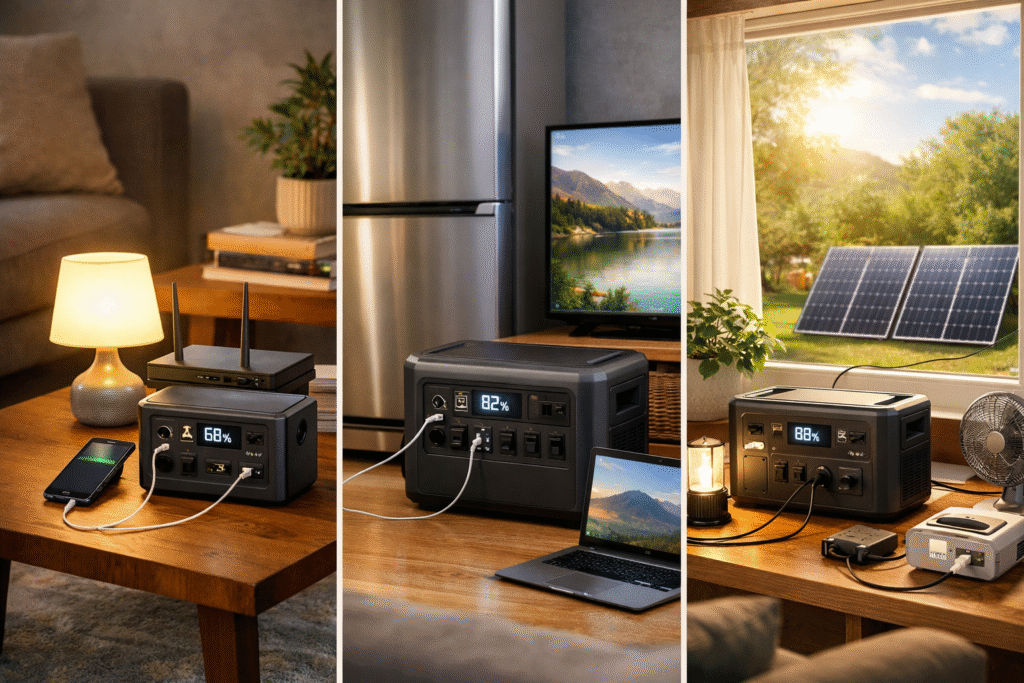
Power outages are becoming increasingly common across the United States. Severe storms, grid failures, and extreme weather can leave homes without electricity for hours—or even days. For many households, this means no refrigeration, no internet, and sometimes no heating or cooling. This will seriously affect people’s normal lives.
As a result, more people are turning to reliable backup power solutions. One option gaining popularity is the solar generator.
But a key question remains: what size solar generator do you actually need? The answer depends on what devices you want to power and how long the outage lasts. Here’s a practical guide to help you choose the right system.
Why Solar Generators Are Popular for Emergency Power
Traditional gas generators have long been used for backup power, but they come with downsides: they’re noisy, require fuel, and must operate outdoors.
Solar generators, in contrast, are quiet, clean, and safe for indoor use. Most systems combine two components:
Portable power station (Included charge controller and inverter)
Solar panels
They store electricity and provide emergency power without noise or fuel. Many homeowners now include solar generators as part of their home backup power plan, especially for short outages.
What Can a Solar Generator Power?
The generator size you need depends on the devices you want to run. Typical household power use includes:
Device Typical Power
Refrigerator 100–200W
WiFi router 10–20W
LED lights 5–15W
Laptop 50–100W
TV 80–150W
CPAP machine 30–60W
Small (≈500Wh): phones, lights, WiFi, small electronics
Medium (1000–1500Wh): refrigerator, lights, laptop, TV
Large (2000Wh+): multiple appliances for longer outages
To estimate your needs, add the wattage of all devices you want to power and multiply by hours of use. For example, running a 150W refrigerator, 15W router, 30W lights, and 60W laptop for 8 hours requires roughly 2040Wh—making a 2000Wh solar generator a suitable choice.
Choosing the Right Size Power Station
Small (300–700Wh)
Lightweight and highly portable. Best suited for charging phones, laptops, cameras, and running small emergency lights.
Medium (1000–1500Wh)
A solid choice for short-term home backup. Can typically power a refrigerator, TV, Wi-Fi router, and several small devices during brief outages.
Large (2000Wh+)
Designed for longer outages and higher power needs. These units can run multiple appliances at the same time, though they are heavier and more expensive.
Home Energy Storage (3000Wh+)
Best for serious home backup during extended outages caused by storms or extreme weather. Many systems can expand to 10–30kWh, providing much longer runtime. Some advanced models also support 120V/240V split-phase output, allowing them to power larger appliances like dryers, well pumps, or EV chargers.
The real advantage of a solar generator is rechargeability. During multi-day outages, solar panels can replenish your system, keeping essential devices running without relying solely on the battery. Even a modest solar setup can provide enough energy each day to maintain key electronics.
Are Solar Generators Worth It?
For many households, yes. They are quiet, clean, safe, and easy to use. While they may not replace a full-home standby generator, they reliably power essential devices during emergencies.
Final Thoughts
Choosing the right solar generator comes down to understanding your energy needs. Identify which devices you need to power, calculate the wattage, and select a system with sufficient capacity. For many households, a 1000–2000Wh solar generator offers a practical balance between portability, cost, and backup power.
However, if you live in an area with frequent outages or strong solar resources, a 3000Wh+ system can provide a much more reliable home backup solution and support longer runtimes for essential appliances.
As outages become more frequent, having a solar generator as part of your emergency plan ensures that your essential devices stay powered when it matters most.
Pingback: Solar Generator for Home: Should Every Household Use One? - Solar Power Life
Pingback: Prime Day Portable Power Station Buying Guide: How to Spot a Real Deal in 2026 - Solar Power Life