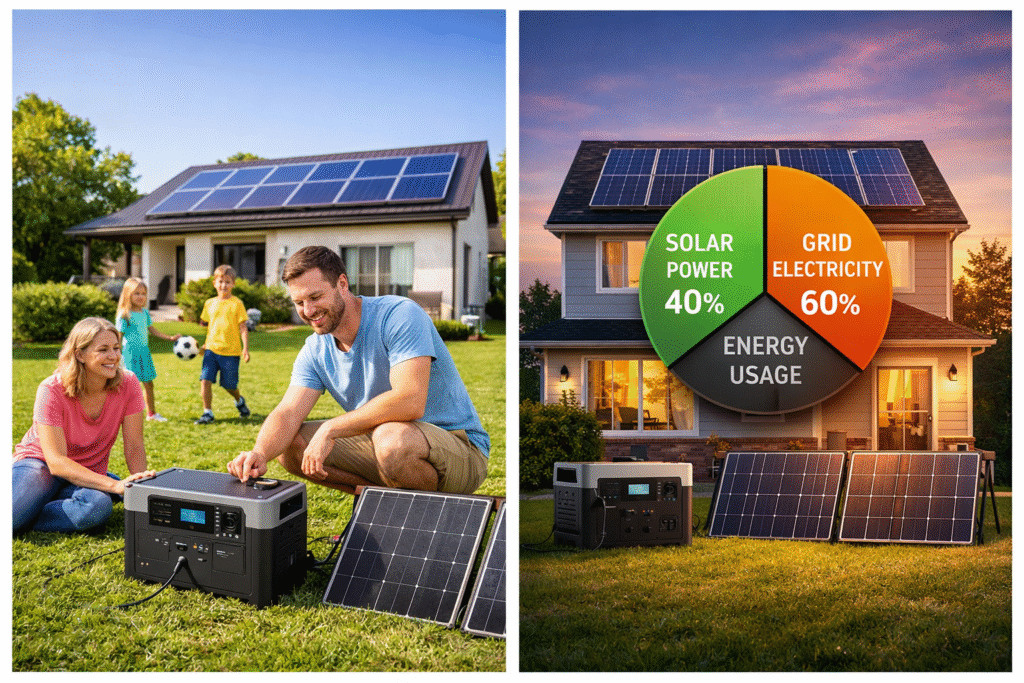
With rising electricity costs and increasing awareness of environmental impact, many homeowners in the US are exploring alternative ways to power their homes. One solution gaining popularity is the solar generator for home — a flexible and eco-friendly option for supplementing traditional grid electricity.
But is it practical for every household? And what percentage of your home’s electricity should a solar generator ideally cover to balance cost savings and environmental benefits?
In this article, we’ll dive into these questions and explore a sustainable strategy that fits most American families.
What Is a Solar Generator for Home?
A solar generator for home typically consists of portable solar panels, a battery storage system, an inverter, and a control unit. Unlike full rooftop solar installations, solar generators are modular and easier to install without professional help or complex permits.
These systems capture sunlight during the day, store the electricity in batteries, and provide power for household use when needed. Many US homeowners use them as backup power during outages or to reduce their monthly utility bills.
Should Every Household Own a Solar Generator?
While solar generators offer many benefits, the answer isn’t as simple as “yes” or “no.” Instead, they should be seen as a complementary energy source, supplementing the electricity from the power grid rather than replacing it completely.
Here’s why most US families find solar generators valuable:
- Backup power: Protects against outages caused by storms or grid failures
- Electric bill savings: Reduces peak electricity consumption during expensive hours
- Eco-friendly energy: Cuts down on fossil fuel consumption and greenhouse gas emissions
- Quiet and low maintenance: Unlike gas-powered generators, solar generators operate silently and don’t require fuel
What Percentage of Household Electricity Should a Solar Generator Cover?
A common misconception is that a solar generator must cover 100% of your home’s energy needs to be worthwhile. However, this is rarely practical or cost-effective for typical American households.
The most reasonable long-term plan is to use a solar generator to cover about 30% to 50% of your household’s total electricity consumption.
Why Covering 30% to 50% Is Ideal
1. Balanced Cost and Savings
Systems sized to supply 30%–50% of your electricity can significantly cut your monthly utility bill without the high upfront cost of oversized batteries and panels.
2. Prolonged Battery Life
Avoiding deep discharges by not relying on the solar generator for all power needs helps extend battery life and reduces replacement costs.
3. Meaningful Environmental Impact
Cutting your home’s carbon footprint by nearly half is a substantial contribution to fighting climate change, especially when combined with other energy-saving practices.
4. Reliable Power Supply
Maintaining some reliance on the grid ensures your home stays powered during cloudy days or periods of high demand when solar output is limited.
How Do Families Use Solar Generators Daily?
Most American households assign solar generators to specific essential uses, such as:
- Lighting
- Wi-Fi routers and communication devices
- Refrigerators and freezers
- Home office equipment
- Emergency power during storms or blackouts
By prioritizing these loads, families reduce grid consumption and increase energy security without drastic lifestyle changes.
Are Solar Generators a Long-Term Energy Solution?
As battery technology improves and solar panels become more efficient and affordable, solar generators are becoming a practical and scalable part of many US homes’ energy portfolios.
They’re especially appealing for renters, homeowners in areas with frequent outages, and those looking to gradually transition to renewable energy without full rooftop solar installations.
Final Thoughts
A solar generator for home is not a complete replacement for traditional electricity but a smart supplement that can provide backup power, reduce utility bills, and lower your household’s environmental impact.
For most American families, sizing a solar generator to supply 30% to 50% of household electricity strikes the perfect balance between cost, reliability, and sustainability.
By adopting this approach, you can enjoy cleaner energy, better control over your power needs, and peace of mind during grid interruptions.
If you’re considering a solar generator for your home, start by calculating your household electricity usage and identifying the essential devices you want to power. This strategy will help you choose a system that fits your needs and budget while making a positive impact on the environment
Pingback: Solar Generator for Power Outages: What Size Do You Need? - Solar Power Life